

30/03/2026
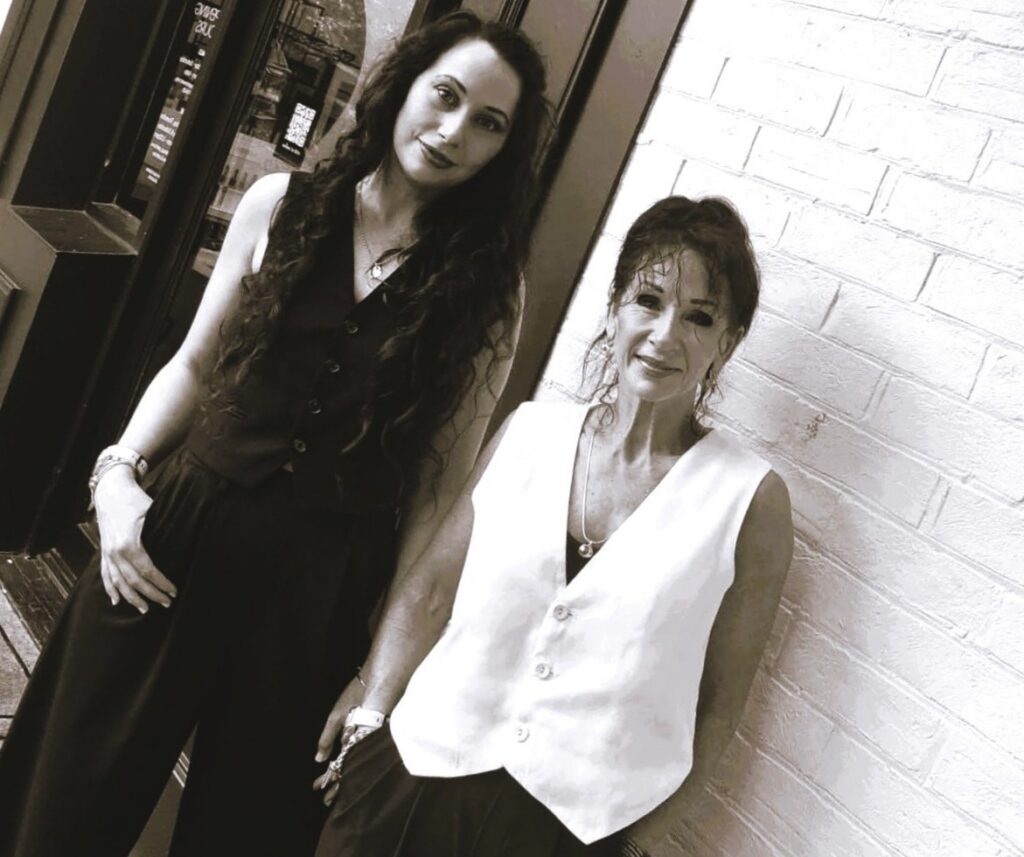
By Susane Belkhiati and Mikhayla Belkhiati at ActivTherapy Collective
A thought piece on designing psychologically informed, therapist-led support that meets participants where they are and helps build deeper, more sustainable progress.
In employment services, we often talk about outcomes, participation, engagement and resilience. These are all important. But after more than 15 years working across employment services, counselling, psychology-informed business practice and behavioural assessment, one thing has become increasingly clear: lasting progress rarely comes from applying a one-size-fits-all model to people with very different barriers, experiences and capacities.
People move forward when support is designed around their needs, not just around a standard model.
Have you ever wondered why some participants seem to ‘go through the motions’ but never really move forward? That’s exactly why need-led support matters; it meets people where they are, not where the program thinks they should be.
That understanding has shaped how we built ActivTherapy Collective.
We did not start with the question, “What program can we deliver?”
We started with a different question: “What do people actually need in order to move forward?”
That shift matters.
Across employment and workforce participation settings, many participants are not just navigating practical barriers, but also entrenched self-doubt, unhelpful thinking patterns, emotional dysregulation, shame, trauma responses, low self-confidence, fractured identity, or repeated experiences of failure in systems that were never designed for them.
When those underlying barriers are not addressed, even the best-intentioned employability activities can miss the mark. A participant may attend the workshop, complete the appointment, or engage for a short period, yet remain stuck in the same internal loop that continues to undermine progress.
From Resilience to Anti-Fragility
Need-led practice challenges the idea that resilience alone is enough. Resilience is important; the ability to cope, recover, or bounce back matters. But many participants do not just need to ‘bounce back’ into the same patterns, environments, or self-beliefs that have kept them stuck. They need the opportunity to build something stronger.
Resilience is often celebrated, but is bouncing back enough? Many participants need more than that: they need the chance to grow stronger through challenge, not just return to the status quo. The concept of anti-fragility captures this. It’s not about pretending hardship is positive; it’s about helping people develop the capacity to learn, adapt, and grow through challenge. In employability support, this means creating self-awareness, emotional regulation, flexible thinking, behavioural confidence, and values-led action. It’s about helping participants not just manage setbacks, but use those experiences to strengthen decision-making, identity, and future direction.
Designing Interventions that Work
For us, being need-led means bringing together multiple disciplines and modalities in ways that respond to the person or group in front of us. Our approach draws on counselling, person-centred practice, CBT principles, behavioural insight, DISC-informed understanding, structured assessments, group facilitation, and psycho-education.
Imagine being in a workshop where the techniques aren’t just taught, but adapted to your exact needs; how much more powerful could that learning feel? That’s the difference a need-led, psychologically informed approach makes. However, the real value is not in naming techniques, but in knowing how to adapt them to the barriers, behaviours and dynamics that are presenting in the room.
In one-on-one sessions, this might include helping participants challenge negative thought patterns, using mindfulness to create emotional space, or applying solution-focused strategies to reduce overwhelm and reconnect participants with their strengths and sense of possibility. In group settings, this might involve peer reflection, narrative reframing, role play, or simply creating a psychologically safe space where participants can begin to hear a different story about themselves.
Programs addressing behaviour, emotional wellbeing, and participation barriers are not only designed by qualified therapists but delivered by registered counsellors (ACA or PACFA members), reflecting the clinical judgement, ethical practice, and duty of care this work requires.
This shift has practical implications for service design.
If we want better engagement and more meaningful outcomes, we need interventions that are responsive, psychologically informed and grounded in the lived realities of participants. We also need to stop assuming that non-participation is simply resistance or lack of motivation. Often, what looks like disengagement is fear, cognitive overload, shame, mistrust, emotional exhaustion, or a belief that “this won’t work for someone like me.”
When services respond to that with more pressure, people often withdraw further.
When services respond with insight, structure, flexibility and the right therapeutic and behavioural tools, people are more able to re-engage in a way that is genuine and sustainable.
That perspective has shaped how we have developed our practice and programs over time. Our work has evolved by listening carefully to need, recognising patterns across participants and groups, and building supports that integrate mental health, behaviour change, employability and practical progression. Rather than forcing people into rigid delivery models, we believe support must be responsive enough to meet people where they are, while still helping them move forward.
For the employability sector, this presents an important opportunity.
As complexity across cohorts increases, providers, employers and practitioners need models that do more than build compliance or short-term confidence. We need approaches that support deeper internal shifts in thinking, emotional capacity, identity and behaviour. We need interventions that recognise the connection between mental wellbeing and employability. And we need to be willing to design around need, not just around process.
Because when people are given the right support in the right way, the outcome is not just greater resilience.
It is greater self-trust, greater adaptability, and a stronger capacity to move forward with purpose.
That is where meaningful participation begins.
Implications for the Employability Sector
If the sector wants better engagement and meaningful outcomes, interventions need to be psychologically informed, responsive, and grounded in participants’ lived realities. Non-participation is rarely just resistance or lack of motivation; it is often fear, cognitive overload, shame, mistrust, or emotional exhaustion.
What if non-participation wasn’t a problem with the person, but a signal that the support being offered isn’t meeting their needs? Responding with insight, flexibility, and the right tools is what allows engagement to be genuine and lasting.
Our work at ActivTherapy Collective has evolved by listening carefully to need, recognising patterns, and building supports that integrate mental health, behaviour change, employability, and practical progression. Rather than forcing participants into rigid models, the work meets people where they are, while still moving them forward.
This approach offers a broader insight for the sector: outcomes improve when programs support internal shifts in thinking, emotional capacity, identity, and behaviour, not just compliance or short-term confidence. It’s about recognising the connection between mental wellbeing and employability and designing around real need, not process alone.
What does it really take for someone to move forward when traditional programs aren’t enough? Over 15 years, we’ve learned that the answer isn’t resilience alone — it’s designing support around real human need.
About the authors
Susane Belkhiati and Mikhayla Belkhiati lead the ActivTherapy Collective team, bringing together experience across employment services, counselling, behavioural insight, psychology, and business. Their work is centred on need-led support that strengthens employability, wellbeing, and long-term participation through therapeutic, strengths-based, and behaviourally informed approaches.
Contact Details: info@activtherapycollective.com.au